Why multi-agency safeguarding is hard, even when everyone wants it to work

Paul Garlick Published on 10th April 2026
When people talk about multi-agency safeguarding, in theory, the idea of organisations working together sounds great. Different agencies bring their knowledge together, information is shared responsibly, and professionals collaborate to support individuals who may be at risk.
In practice, anyone involved in safeguarding knows that it is rarely that simple.
Multi-agency safeguarding brings together professionals from different services, organisations and professional cultures. Each of those partners brings their own responsibilities, systems, pressures and ways of working. While the shared aim of protecting people in vulnerable situations is clear, the path to achieving that aim together is seldom a straight one.
Different organisations, different pressures
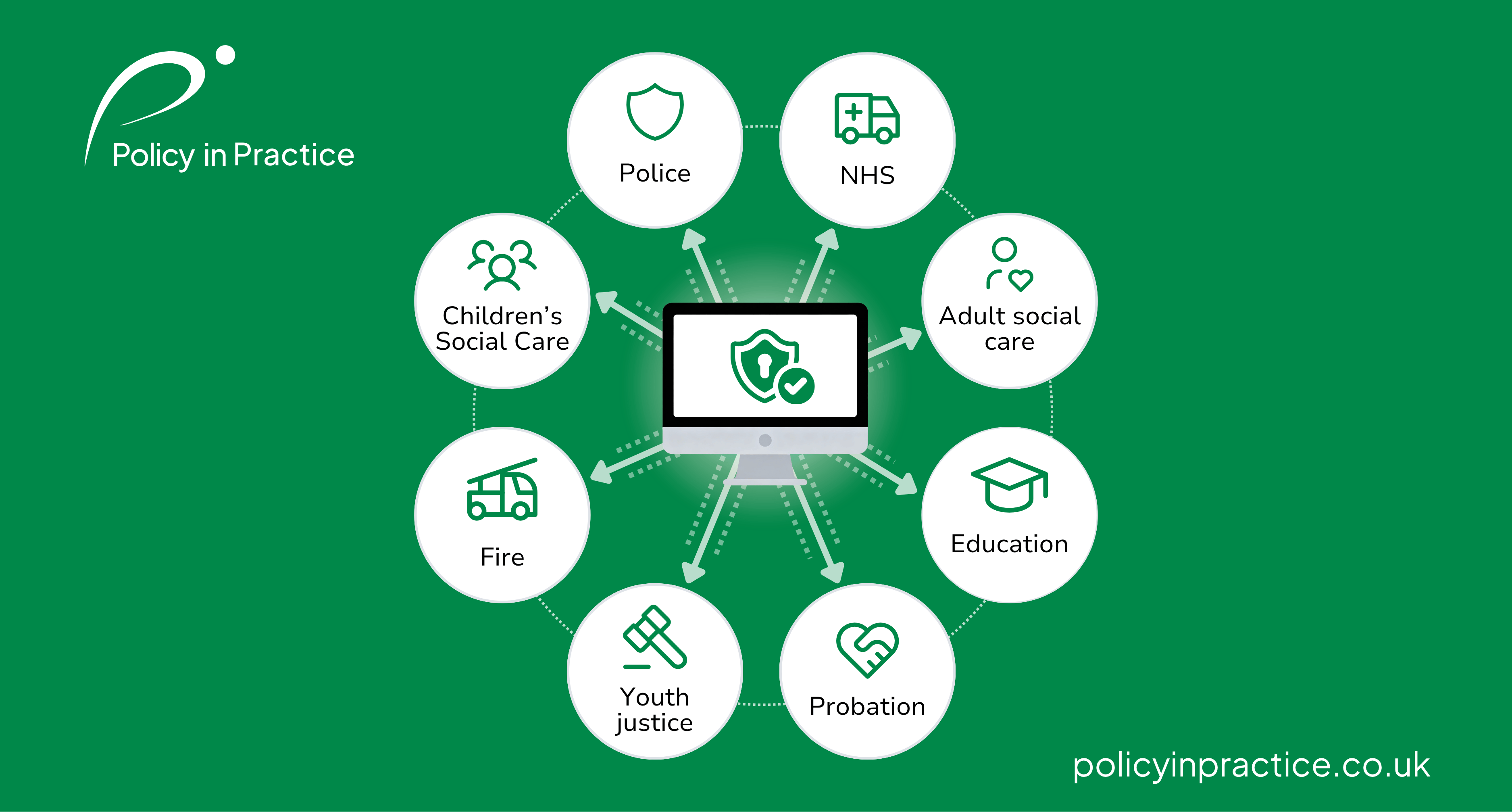
Local authorities, health services, police, fire services, schools, probation services, youth justice services and other partners all encounter safeguarding concerns in different ways.
A social worker may be working with a family over an extended period of time. A police officer may encounter a situation during a single incident. Health professionals may observe patterns over repeated appointments, or risk may be indicated through missed appointments. Each organisation is therefore looking at safeguarding through a slightly different lens.
Alongside this, every agency operates under its own legal duties, operational priorities, and resource pressures. Thresholds for intervention may differ, as may the information systems used to record concerns. Even the language professionals use to describe risk can vary between services.
None of these differences are problematic in isolation, but they can make collaboration more challenging.
The reality of day-to-day coordination
Much of the work of multi-agency safeguarding relies on coordination between people who are managing significant workloads and responding to urgent situations.
Meetings such as Multi-Agency Safeguarding Hub (MASH) discussions or safeguarding boards bring partners together, but they represent only a small part of the day-to-day communication that needs to take place. Outside those forums, professionals rely on emails, phone calls, and internal systems to exchange information.
While these approaches can work well, they also depend heavily on individuals knowing who to contact, when to escalate concerns, and how to interpret information coming from different services.
In other words, collaboration often relies on professional relationships and experience rather than just a consistent shared view of the information involved.
When demand for safeguarding services increases
The challenge becomes more visible when demand for safeguarding services rises.
Professionals across the agencies are managing increasing caseloads, complex circumstances, and limited time. When services are under pressure, it becomes harder to maintain the level of coordination that effective multi-agency safeguarding requires.
Small delays in communication can grow into larger gaps. Information may sit within one service that could provide important context for another. Concerns may only become visible once several separate issues begin to connect.
Again, this is not about professionals being unwilling to collaborate. In most safeguarding environments, there is a strong culture of partnership working. The challenge is that collaboration is needed within structures that were not always designed with shared visibility in mind.
The limits of informal processes
Over the years, many safeguarding systems have developed informal ways of working that help bridge organisational boundaries. Experienced professionals often know who to contact in another service, how to raise a concern quickly, or how to navigate different systems. These informal networks can be incredibly valuable.
However, they also create a dependency on individual knowledge and relationships. When key staff move roles, workloads increase, or services change structure, those informal pathways can become harder to maintain.
Sustainable multi-agency safeguarding requires something more consistent than informal coordination alone.
Supporting professionals to work together
Despite these challenges, it is important to recognise how much safeguarding professionals achieve every day through partnership working.
Across local authorities and partner organisations, countless examples exist of agencies coming together to support individuals and families in difficult circumstances. The commitment to collaboration is very real.
For instance, teams in South Wales are using a data led prevention approach to gain instant access to the most up to date picture of safeguarding interactions between LA Social Care & Education teams, NHS and Police. They are also linking up services to take the strain away from A n E, reducing the amount of placements needed and reducing referral times by over 4 hours.
What many professionals need is not more commitment but better support for the way they already work together.
That support might come in many forms: clearer governance arrangements, shared understanding of information sharing responsibilities, or better visibility of safeguarding insight across organisations. When those elements are in place, collaboration becomes easier and more consistent.
A shared responsibility
Safeguarding has always been a shared responsibility. No single organisation can see every aspect of someone’s circumstances, and no single professional can carry the full picture alone.
The strength of multi-agency safeguarding lies in the ability to bring those perspectives together in a way that allows earlier and more informed intervention.
The challenge, as many practitioners know, is ensuring that collaboration is supported by systems and processes that make it sustainable in the long term.
Because while everyone involved may want safeguarding partnerships to work well, goodwill alone cannot always carry the full weight of the system.
I’d be interested to hear how others experience multi-agency working in practice.
What helps collaboration work well between organisations in your area, and where do the biggest challenges still exist?