Council Tax Reduction: Practical approaches to policy reform and supporting the most vulnerable
17 February 2026
With Council Tax arrears in England hitting a record £6 billion, the design of local Council Tax Reduction (CTR) schemes has never been more critical. Too often, councils struggle to protect low-income residents while navigating rapid policy shifts, from the new Child Poverty Strategy to the administrative pressures of Universal Credit fluctuations.
In this webinar, we explored how councils can transform these challenges into opportunities for fairer, more efficient support. We shared practical approaches to using data-driven modelling to simplify administration, harmonise schemes during Local Government Reorganisation (LGR) and align with new statutory requirements to reduce inequality.
Listen back to hear
- What to consider when designing your CTR scheme for April 2027
- Harmonising schemes and navigating future challenges
- Pressures on councils: Complex administration and tight budgets
- Open discussion and Q&A
Guest speakers



Listen back to our individual speakers
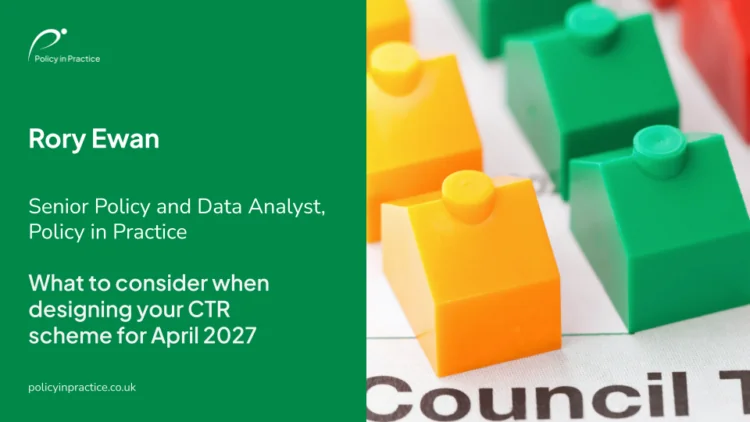

"In 2026, going into 2027, there's really a changing landscape of how local authorities should be designing their CTR schemes. There's not just the budgetary pressures anymore, there's policy changes, judicial reviews to take into account and there's lots more guidance to take into account when you're designing your scheme."

"We had the reports from Policy in Practice that proved that it's a really fully considered modelling process and we knew what we were getting into rather than just saying we think this would be a good idea. Having that evidence base is always just completely invaluable going through any governance process and persuading people who may be a little bit more dubious about what you're trying to do."

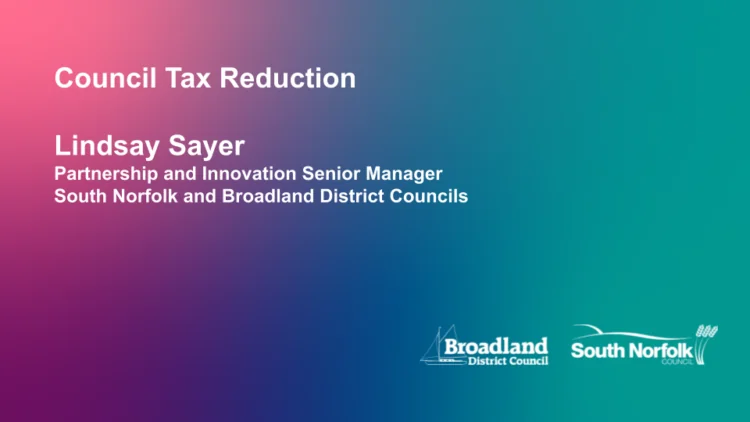
"There's a drive to do this because it's a bit like early intervention; if you can get someone onto CTR you're improving their wellbeing, streamlining the process for yourself, so saving resource, but saving at the back end as well because there'll be less to collect, lower collection costs and you're helping people build their financial resilience, build their wellbeing. It just makes a lot of sense."